Understanding Cinematic Language
1. What is Cinematic language
Cinematic language is a system of methods and conventions of visual and audio choices that filmmakers use to tell a story while communicating with the audience.
1.1 Types and Definitions
How written languages use words and grammar. Cinematic language uses images, movement, sound, and editing to create meaning in a film.Some of the main building blocks of cinematic language are:
- Shot Size: is how much of the setting or subject is being shown within a given frame. The combination of shot size and camera angles defines the visual language of a film. The different types of shot sizes include wide shots, medium shots, and close-ups

- Camera angle: the specific physical position and direction of a camera in relation to the subject it is filming or photographing. Types of camera angles include high angles, low angles, eye-level, Dutch angles, worm's-eye view, bird's-eye view/over-the-shoulder shot, shoulder level, and aerial. These can suggest vulnerability, power, or realism.

- Composition: Composition refers to the way elements of a scene are arranged in a camera frame. Shot composition refers to the arrangement of visual elements to convey an intended message. Here are the most common composition rules:
- Rule of Thirds: Divide the frame into a 3×3 grid. Place the subject along the lines or at their intersections rather than in the centre.
- Leading Lines: Use roads, fences, rivers, railings, or other lines to guide the viewer's eye toward the subject.
- Symmetry and Patterns: Use balanced, mirrored, or repeating elements to create harmony and visual interest.
- Framing: Frame the subject using windows, doorways, arches, branches, or other foreground elements to draw attention.
- Negative Space: Leave empty space around the subject to create emphasis, simplicity, or a sense of isolation.
- Golden Ratio (Golden Spiral): Arrange the subject according to a spiral or proportional balance found in nature for a naturally pleasing composition.
- Fill the Frame: Move closer or zoom in so the subject occupies most of the frame, removing unnecessary distractions.
- Depth (Foreground, Middle Ground, Background): Include elements at different distances to make the image feel three-dimensional.
- Balance: Distribute visual weight evenly. A large subject on one side can be balanced by several smaller elements on the other.
- Leading Space (Look Room): Leave space in front of a moving subject or in the direction a person is looking.
- Headroom: Leave an appropriate amount of space above a person's head. Too much or too little can feel awkward.
- Simplification: Remove distracting objects so the viewer focuses on the main subject.
- Perspective: Change your shooting angle (high, low, eye level, bird's-eye, worm's-eye) to create a unique composition.
- Diagonal Composition: Arrange elements diagonally across the frame to add energy and movement.
- Triangles: Position subjects to form triangular shapes, creating stability and directing the viewer's eye.
- Movement: a still camera feels different from a moving one; pans, tilts, and tracking shots can reveal information or create energy. Movement can follow a character, reveal a space, or increase emotional intensity. Unnecessary movement, however, can distract from the story. Types of movement in film include:
- Handheld: Handheld or "shaky camera" footage feels raw and authentic, as if someone filmed it on their phone. This can elevate your film's realism.
- Stabilised: Smooth camera movement provides a more omniscient and professional perspective while expanding your scene's depth of field. This level of fluid, intentional movement often requires specialised training and technical equipment, such as camera tracks, stabilisers, and sensors.
- Static: Static shots feature almost no camera movement at all. While shots with movement are often more cinematic, tossing in a few static shots can give viewers' eyes a break between fast-moving shots and encourage them to pay more attention to the details.
- Sound: Cinematic language is never only visual. Sound gives texture and emotional depth to film. Ambient sounds can make a location feel real. Silence can create focus or tension. Music can support mood, but it should not replace meaning that the images fail to communicate.
- Editing: Editing is where separate images begin to function as cinema. A single shot can show something, but two or three shots in sequence can create meaning, rhythm, and emotion.
2. History of Cinematic Language
2.1 Cinema Before Language (1895–1905)
The earliest films had no grammar to speak of. The Lumière Brothers pioneered the technical craft of moviemaking with their cinematograph, producing the first commercial films in 1895. These were essentially "photographed stage plays": static, locked-off camera, entire scenes in a single wide shot, no continuity editing, no close-ups, no intentional lighting design.The medium existed, but the grammar did not.
2.2 Three Foundational Traditions: Realism, Formalism, and Classicism
Three early pioneers each started a tradition that continues throughout film history:- Realism (the Lumière Brothers): Showing truth, preserving the illusion that the film world is an objective mirror of reality. Handheld camera, available light, non-professional actors, real locations.
- Formalism (Georges Méliès): Expressing a personal vision through distorted, exaggerated images. Dream-like sets, complicated camerawork, symbolic lighting. Méliès used stop-motion photography and multiple exposures to create magical visuals in films like A Trip to the Moon (1902).
- Classicism (Edwin Porter): Ideal storytelling where the audience is caught up in characters and problems without being distracted by filmmaking techniques. Porter's The Great Train Robbery (1903) used actors, sets, and effects to tell a believable story.
2.3 The Invention of Editing (1905–1920)
Filmmakers like James Williamson and D.W. Griffith learned to manipulate time and space. Williamson perfected narrative building techniques, using the first "reverse angle" cut in film history and creating what would become "film grammar".2.4 Expressionism, Montage, and Visual Meaning (1920s)
- German Expressionism changed everything for the "look" and "feel" of cinema: contrast, gothic imagery, colored filters, stylised distorted sets, intense shadows, and emphasis on mood over realism.
- Soviet Montage Theory (1910s–1930s) established the principles of film editing. Filmmakers like Lev Kuleshov, Sergei Eisenstein, and Dziga Vertov discovered that meaning emerges from the collision of shots, not the shots themselves. The Kuleshov effect demonstrated how editing creates emotional associations. Eisenstein's Battleship Potemkin (1925) remains the most noteworthy film from this movement.
2.5 Classical Hollywood: Standardisation of Film Language (1930–1960)
The arrival of synchronised sound in 1927 with The Jazz Singer added a new layer of complexity to narrative filmmaking. The studio system then codified a set of invisible conventions: eye-line matches, the master shot/coverage approach, three-point lighting, clean continuity, the 180-degree rule, and editing designed to be invisible.This was filmmaking as a mass-production system, a language refined for clarity and audience comfort. Technicolour became the standard for colour, further expanding the expressive palette.
2.6 The Rule Breakers: New Waves and Modernism (1960s–1970s)
Post-World War II, global cinema began reflecting more diverse stories and perspectives. Italian Neorealism portrayed the struggles of ordinary people. The French New Wave proliferated the auteur theory, suggesting the director is the "author" of a movie. Jean-Luc Godard's Breathless exemplified a minimalist narrative where story is secondary to audio and visuals.These movements introduced jump cuts, handheld spontaneity, natural lighting, location-based shooting, direct address to camera, fragmented storytelling, and anti-continuity editing.
India underwent a similar New Wave after World War II, with classic Bengali cinema and directors like Satyajit Ray.
2.7 Technology Reshapes Style (1980s–2000s)
The digital revolution fundamentally altered cinematic language: Steadicam, computer-controlled cameras, motion control/VFX, Dolby stereo, early CGI, digital editing software (Adobe Premiere Pro, Final Cut Pro), and digital cameras made high-quality filmmaking more accessible and affordable.Dogme 95, the Danish movement led by Thomas Vinterberg and Lars von Trier, brought filmmaking back to primal roots: no non-diegetic sound, no superficial action, no director credit.
2.8 Contemporary Cinematic Language (2010s–Present)
The progression of cinematic language illustrates the ongoing transformation of film as both an artistic medium and a form of communication, with each innovation broadening cinema's expressive capacity.
3. Uses and Purpose
There's no single way to write a sentence. The English language gives you over a million words to utilise, as long as you use them with effective grammar and intentionality. Additionally, you can't just use one word or type of word to write your sentence — you need many types of words, such as nouns and verbs, and you need to know how to use each one and how each word choice can support or impair your message.Cinematic language is the same way. There are countless combinations of ways you can position and move cameras, talent, lights, and every other element of film production. However, you can't simply angle a camera in a specific direction because it "looks cool," as various angles and framing techniques can elicit different feelings with audiences.
Every decision that goes into your composition, lighting, camera movement, colour palettes, and other visual details should be intentional and guided by cinematic craft. Let's break these elements down to understand what is meant by cinematic language and how it can create subconscious brand resonance.
3.1 Shots and Visual Meaning
Every shot has its own meaning and conveys something to the audience. A wide shot helps us understand space, environment, and relationships. A medium shot is useful for action and conversation. A close-up brings us closer to emotion, detail, or psychological intensity.Thinking about shot choice helps answer simple but important questions:
- What should the audience notice first?
- How close should we feel to the subject?
- Is this moment about action, emotion, or context?
- What is left outside the frame?
3.2 Composition and Movement
Composition is the blueprint of cinematic storytelling. How emotion, power and meaning are conveyed through purely visual means. From Kubrick’s geometric perfection to Wes Anderson’s pastel symmetry, great directors use composition and framing in film to shape the audience experience at a fundamental perceptual level. Composition in film is more than personal taste—it’s a form of communication that works through visual language that we all understand instinctively. Understanding film composition allows filmmakers to make intentional choices that serve the story and emotion.3.3 Sound in Itself
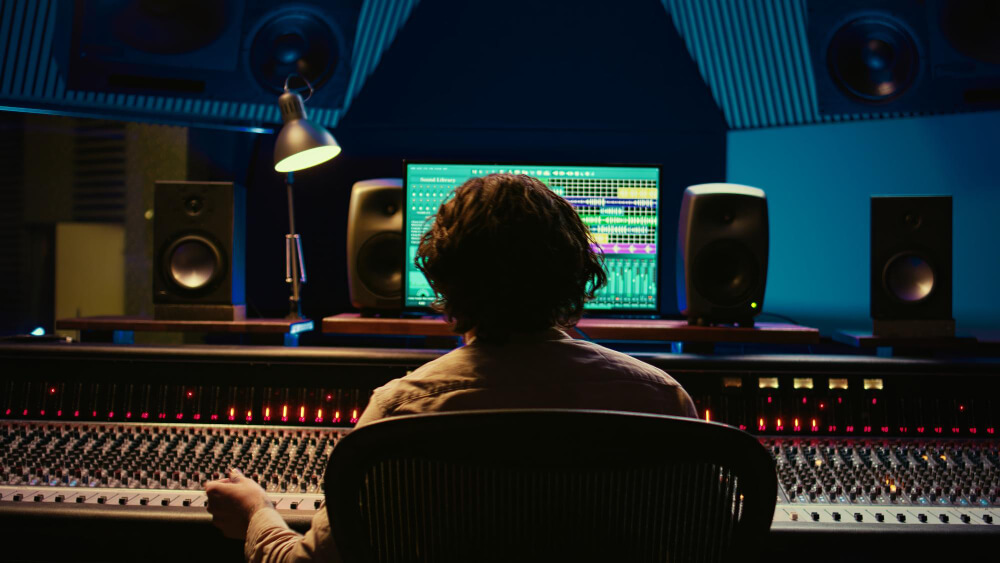
Cinematic language encompasses more than just visuals. Sound adds layers and emotional richness to a film. Background noises can enhance the authenticity of a setting. Silence can generate emphasis or suspense. Music can enhance the atmosphere, but it must not substitute for the significance that visuals cannot convey.When working on a short film or exercise, participants should think about:
- what the audience hears inside the scene,
- whether dialogue is clear and necessary,
- how silence can be used intentionally,
- whether sound supports or overwhelms the image.
3.4 Editing
Editing helps filmmakers:
- establish time and space,
- connect actions across different angles,
- control pace,
- build suspense,
- create contrast,
- guide emotional response.
Conclusion
Bibiliography
https://ltx.io/glossary/film-composition
https://www.studiobinder.com/blog/types-of-camera-shots-sizes-in-film/
https://thelongtake1.substack.com/p/a-guide-to-cinematic-language-1-mise
https://thelongtake1.substack.com/p/a-guide-to-cinematic-language-1-mise
https://www.studiobinder.com/blog/rules-of-shot-composition-in-film/
https://www.cinergies.coop/lesson/basics-of-cinematic-language/
The History of Film Timeline — All Eras of Film History Explained
Realism, Formalism, Classicism | An Introduction to Film Analysis
https://www.mjstjournal.com/index.php/mjst/article/view/5487
https://howtofilmschool.com/cinema-studies/the-evolution-of-cinematic-language/
https://revistadecineforum.com/index.php/cf/article/download/173/140/344
https://acd.pressbooks.pub/filmstudies/chapter/editing/
https://www.kiksee.com/evolution-narrative-cinema-storytelling
Comments
Post a Comment